
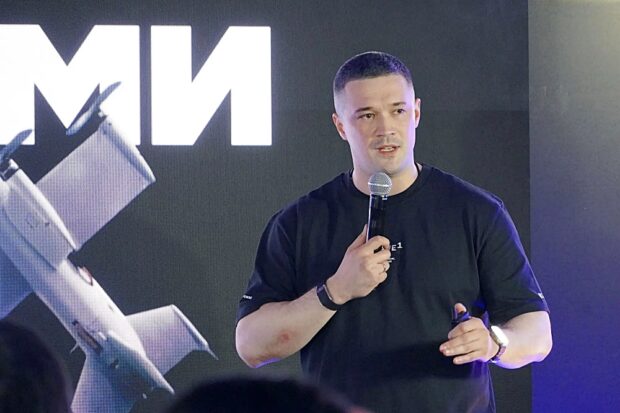
A new defence technology company being launched by former Ukrainian Defence Minister Mykhailo Fedorov will produce interceptor unmanned aerial vehicles (UAVs) designed to target jet-powered Russian UAVs, with Palantir Technologies as its first investor. In a statement, Fedorov said Ukraine would be the company’s priority.
“you and your colleagues are launching a company that I think will be defining for the world, bringing your knowledge and acumen about the art of war.”
Before becoming defence minister in January, Fedorov served as minister for digital transformation, a role in which he was celebrated for a Silicon Valley-style approach to delivering major changes intended to better prepare Ukraine for an evolving fight.
“During the full-scale war, our team gained unique experience working with defence technologies in Ukraine and seeing firsthand how technology is transforming modern warfare,”
he said. Now, he and his team intend to leverage that in a new venture.
One of the key products in the unnamed technology company’s portfolio will be an interceptor UAV which struck down two Geran-5 turbojet-engined UAVs in the span of one month in combat tests, Mykhailo Fedorov told Janes on 13 October. Crews from the Lasar’s Group unit, which operates within the National Guard of Ukraine (NGU), have been credited by Fedorov for carrying out the tests in Kyiv.
“By the end of 2026, we plan to produce hundreds of these interceptors [UAVs] per month. I’m confident that Russia can be stopped. Our next challenge is to do the same with jet-powered versions,” he added.
Fedorov said. The interceptor UAV can reach speeds that enable it to intercept one-way attack (OWA) UAVs equipped with turbojet engines, including Geran-5 UAVs, “before they reach a city,” he added.
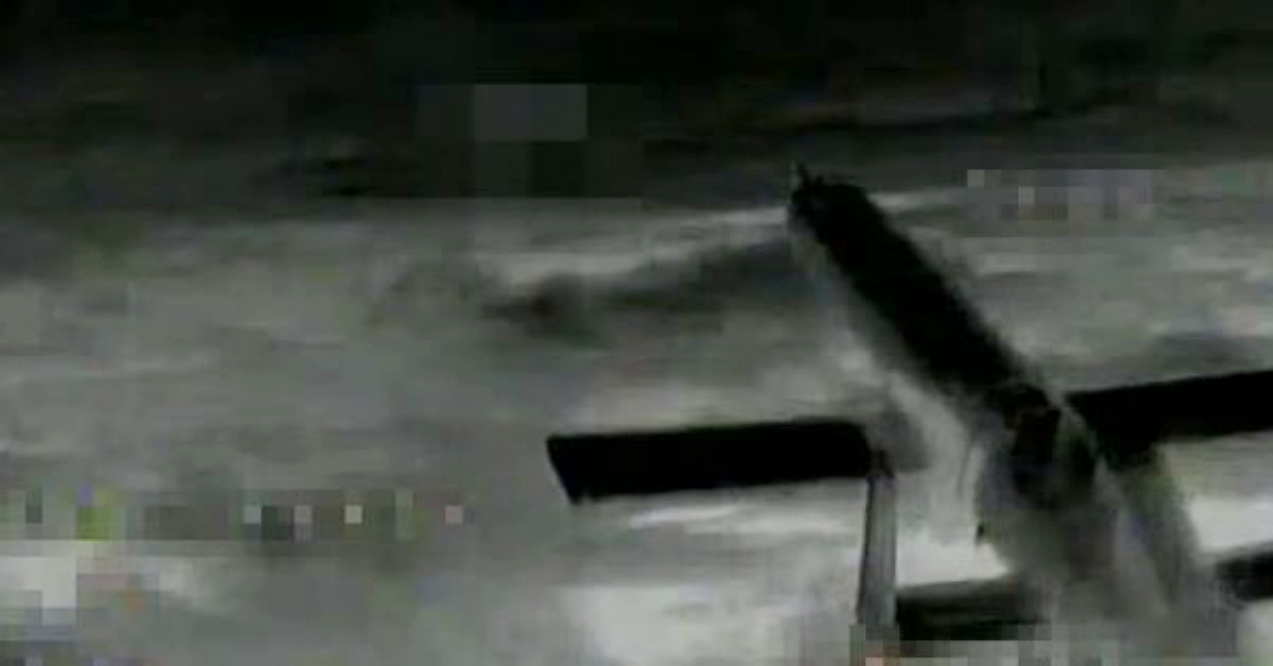
Still image from video shared by Mykhailo Fedorov depicting Russia’s Geran-5 OWA UAV moments before being struck by a new interceptor developed by an unnamed defence technology company. (Mykhailo Fedorov )
The UAV is currently operated by a human pilot, but the aim is to make it autonomous with the integration of artificial intelligence (AI), Fedorov confirmed. In a 12 October social media post, Fedorov said the goal was to make the interceptor “fully autonomous, capable of detecting and engaging Russian drones without operator involvement”. No other details were provided to Janes on the interceptor’s level of autonomy.
The future development of Ukrainian interceptors includes attempts at automation with little to no human involvement,
Fedorov said that testing is ongoing. The next steps are to improve the technology and scale up production. In translated remarks, he said the interceptor “will be very affordable. That was our goal from the outset: to develop a low-cost, mass-producible solution that can be scaled rapidly,” he said.
During his six months as Ukraine’s defence minister earlier this year, Fedorov pushed for a sweeping modernization of the military, including through a robotic-centric approach to combat. His tenure coincided with a string of battlefield successes for Kyiv, primarily through drone warfare.
Fedorov said he intends to invest more in research and development and the Ukrainian engineering team behind the interceptor, making its intellectual property a “key asset” in his portfolio. He also plans to open investment to other partners; the first funding round is expected soon.
Sources: Janes; Business Insider